

 English
 عربى
عربى Español
 Français
A bucket mold is often viewed as a straightforward tooling product. Yet, buyers who want stable production and clean part appearance usually discover that the real value lies in the details behind its design and manufacturing. Many procurement managers reach out to Bucket Mold Manufacturers because they want predictable molding cycles, fewer trials, and molds that stay stable after long-term runs. Below are several user-focused angles that often guide their decisions and questions during sourcing.
1. How the cooling layout affects cycle stability and product appearance
One common concern among buyers is inconsistent cycle time. This typically occurs due to uneven cooling within the bucket mold. When the cooling channels are not close enough to the molding surface, or when the diameter limits water flow, heat stays in the core and cavity. This cycle to longer cycles, an unstable shrink pattern, and visible marks near the gate area.
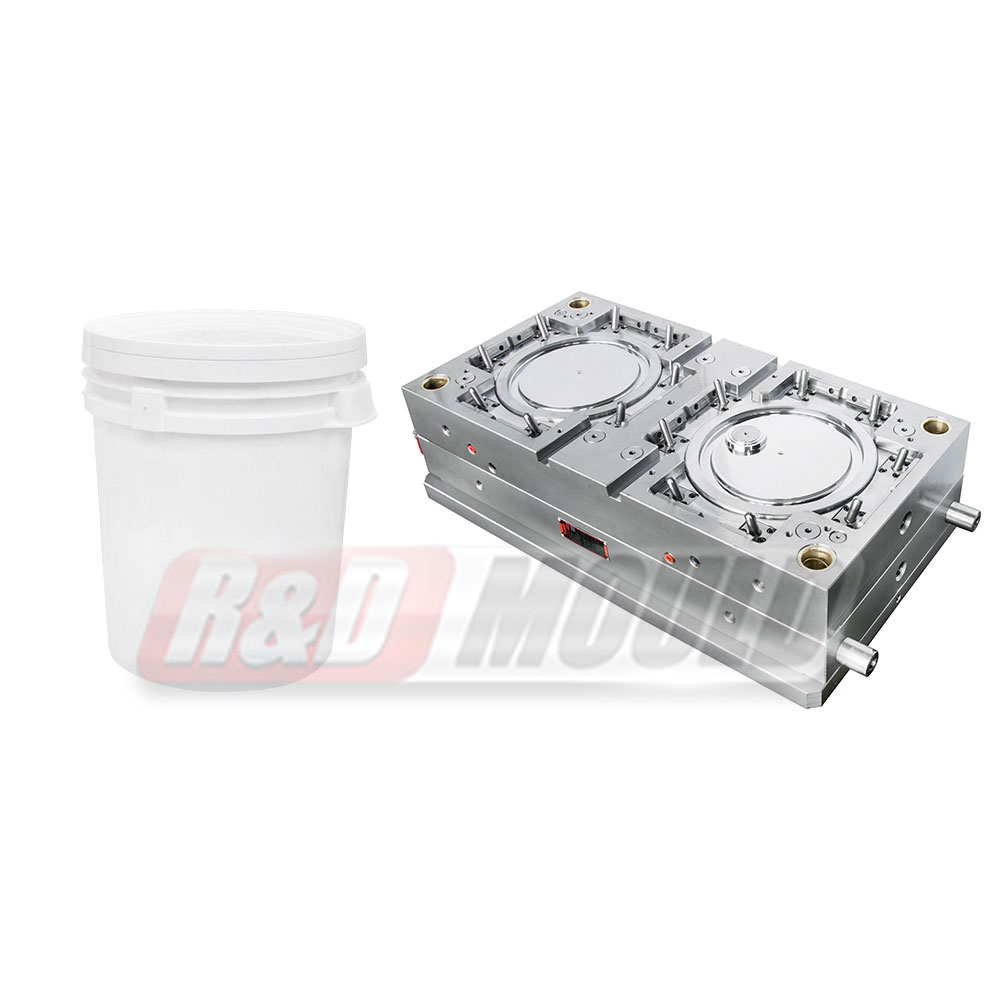
Manufacturers that specialize in thin-wall container tooling or paint bucket series typically build cooling channels 15 mm below the molding surface with diameters above 12 mm, allowing smooth water flow. Buyers repeatedly mention that they want predictable performance, not constant adjustments on the injection machine. For this reason, sourcing from bucket Mold Manufacturers with deep experience in cooling design helps avoid delays later in production. A precise layout is especially important around areas close to hot runner tips, where heat tends to accumulate.
2. Steel selection and what customers usually ask before ordering
When customers request a quotation, one of their early questions is the expected lifespan of the bucket mold. The choice of steel directly answers this. For example, many factories producing paint pails run them daily, so they ask whether the mold can keep stable for over one million cycles without deformation.
For general production volumes, steel grades such as 2738 with hardness around HRC35–38 are commonly used. For higher-volume projects, customers prefer 2344 with hardness between HRC45–48. Some buyers also ask about reducing cycle time, especially for thin-wall projects, food containers, or IML containers. In such cases, inserts made from BeCu in specific areas—such as core tops, cavity bottoms, or sliders—help remove heat faster. These details influence both the delivery time of the mold and the future production cost.
3. What precision machining means for part stability
Another point buyers often raise is the evenness of wall thickness. A small eccentricity in the core can cause the bucket to be off-center, which may not affect appearance dramatically but creates functional issues when it comes to stacking, sealing, or applying IML labels.
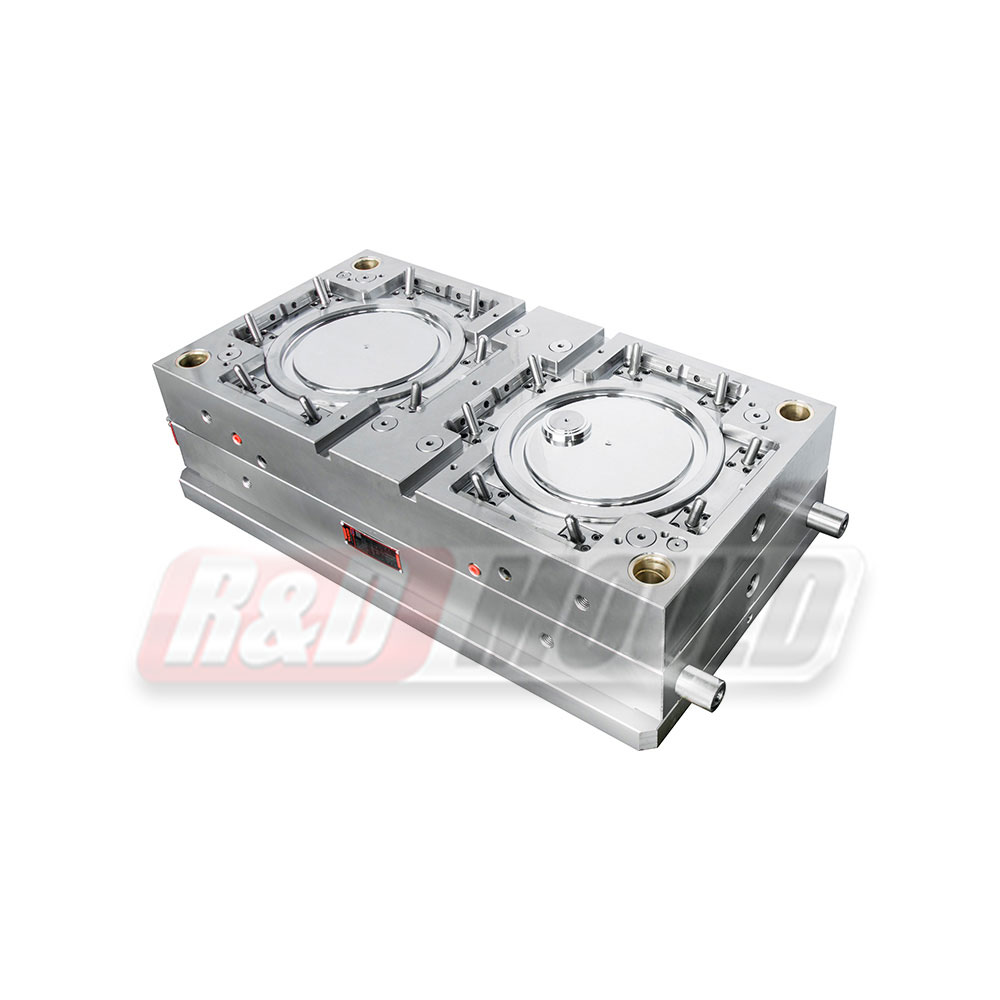
Precision tooling is therefore a recurring topic when discussing with bucket Mold Manufacturers. Stable machining accuracy cycles to smooth material flow, cleaner cavity surfaces, and consistent thickness. Companies with experience in multiple container categories—such as paint pails, thin-wall boxes, cutlery molds, and PET preform molds—normally understand how to avoid these machining errors because they have dealt with similar challenges across different product types.
4. Why experience across container categories helps buyers reduce risk
Many customers choose manufacturers with broader product experience because container molds share similar technical challenges: cooling layout, ejection structure, steel strength, hot runner configuration, and parting line fit. A supplier that has produced a wide range of packaging molds—such as Paint Bucket Moulds from 0.5L to 22L, PET preform molds, closures, and IML molds—often reacts more quickly to design adjustments and offers effective technical suggestions.
Buyers running high-output injection lines usually prefer to cooperate with a bucket Mold manufacturer that provides both design support and long-term technical tracking. This combination reduces trial times and shortens the period before mass production. Those who manage multiple factories or serve brand clients appreciate consistent project handling from design to shipment