

 English
 عربى
عربى Español
 Français
Real Answers on Basket Mould Production
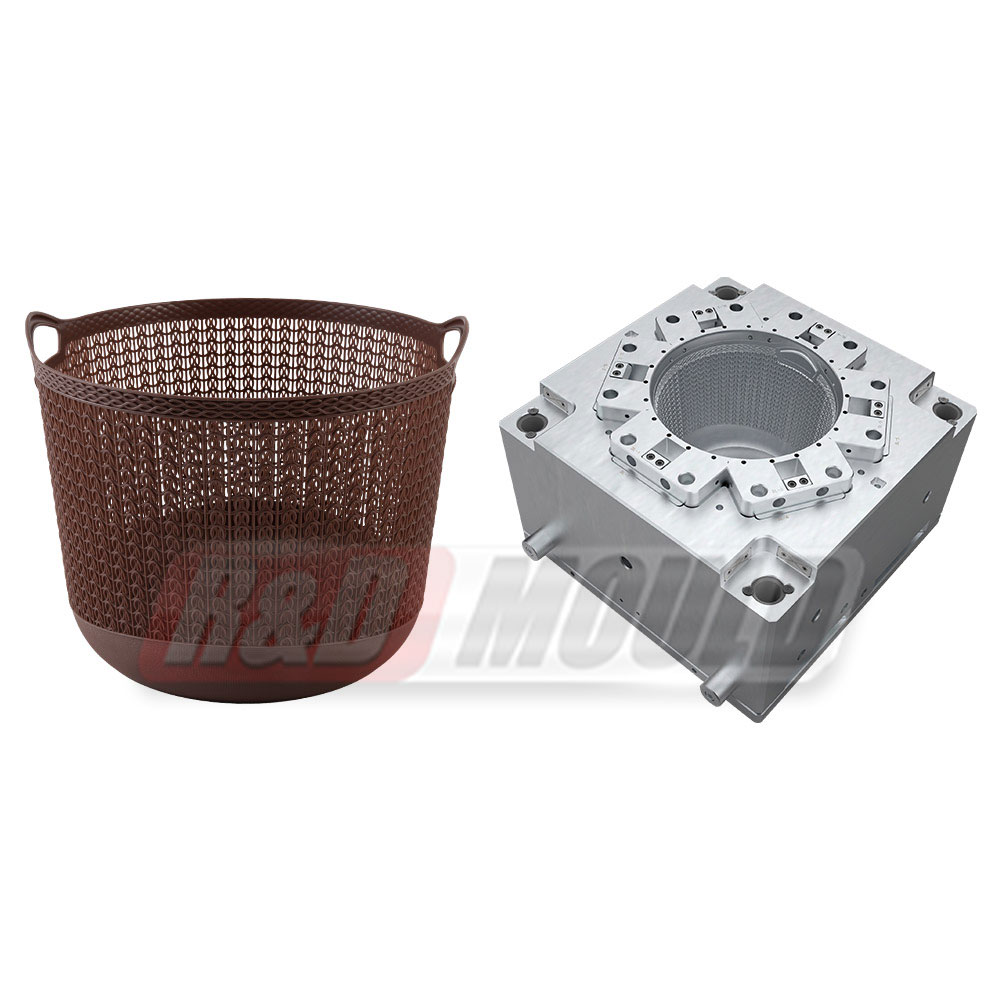
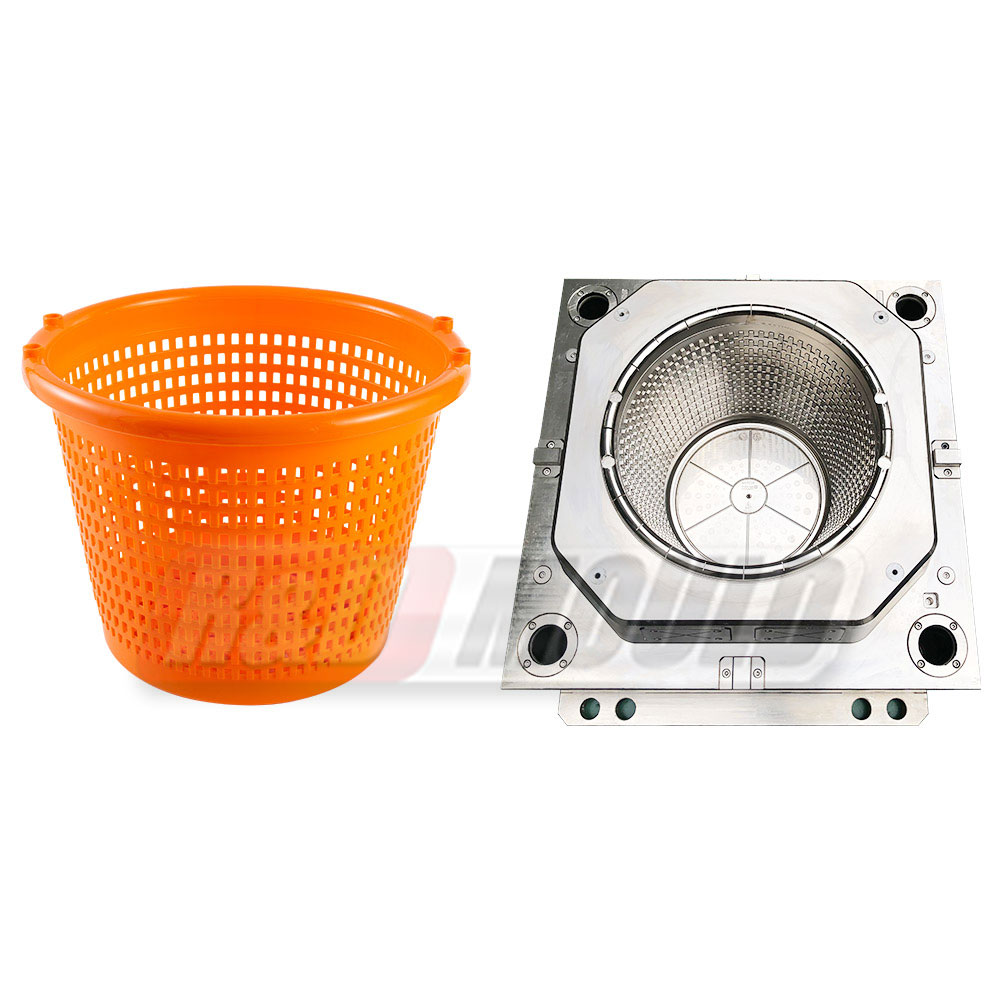
You run a basket mould and see melting lines on the parts. Or the cooling takes too long. Or pins get damaged. These are common headaches. Over 15 years of making basket moulds, we have seen the same problems again and again. R&D Mould is a basket mould manufacturer in China that produces plastic injection basket moulds for shopping baskets, laundry baskets, and storage baskets. Here are practical fixes for real shop floor issues.
Cooling Problems with Basket Mould
Heat gets trapped at the top of the core. That slows down your cycle. Many moulds use regular steel there, but steel does not pull heat fast enough. So makers put beryllium copper at the top of the core part of the plastic basket mould. Beryllium copper pulls heat away quickly. Your basket comes out cooler and straighter. A good basket mould with this design runs faster cycles. No more waiting around for the part to cool.
Melting Lines on the Basket Surface
Melting lines happen when plastic flows around holes and meets at different temperatures. One side cools too early. That leaves a weak line. To avoid this, you need cooling on both sides of the core and cavity. A proper basket mould design puts cooling channels near the cavity and near the core. Temperatures stay even across the whole cavity. Parts come out clean.
Bumping Holes and Running Edges
Basket moulds have many small holes. Each hole needs a pin. If the parting surface is poorly placed, plastic squeezes into gaps. That makes thin fins – running edges. Also, pins can bump against the holes and damage edges. The fix is a reasonable parting surface. Put the parting line along a natural shape of the basket. Use a good R angle at each hole base. That R angle guides plastic flow and protects pins. Without this, you trim flash all day.
Steel Choice for Basket Mould
What steel should you pick? Cheap steel wears out fast. For many plastic basket moulds, grade 2738 works well. It polishes nicely. A polished cavity gives your basket a smooth, glossy look. No extra finishing needed. Also, 2738 handles rapid injection cycles. R&D Mould recommends 2738 for shopping basket moulds and laundry basket moulds. It lasts a long time under high pressure.
Why a Specialised Basket Mould Factory Helps
A general mould shop may not know these details. They use standard cooling and basic steel. Then you get problems. A Basket Mould Factory, like Taizhou Huangyan R&D Plastic Mould Co., Ltd, builds tools for basket shapes. They know where to put the parting line. They know where to add beryllium copper. They also customise – from small laundry basket moulds to large storage basket moulds. Their experience with rapid injection means your mould works from day one. No trial and error on your floor.
Putting It Together
When you get a new basket mould, check three things. Cooling channel layout – need it on both sides. Material at the core top – beryllium copper helps. Parting surface design – R angles stop edge running. These features come from experience. R&D Mould has produced many different types of plastic basket moulds over the years. Their team uses 2738 steel for long mould life. They design cooling before cutting steel. Your basket mould then runs clean parts shift after shift.