

 English
 عربى
عربى Español
 Français
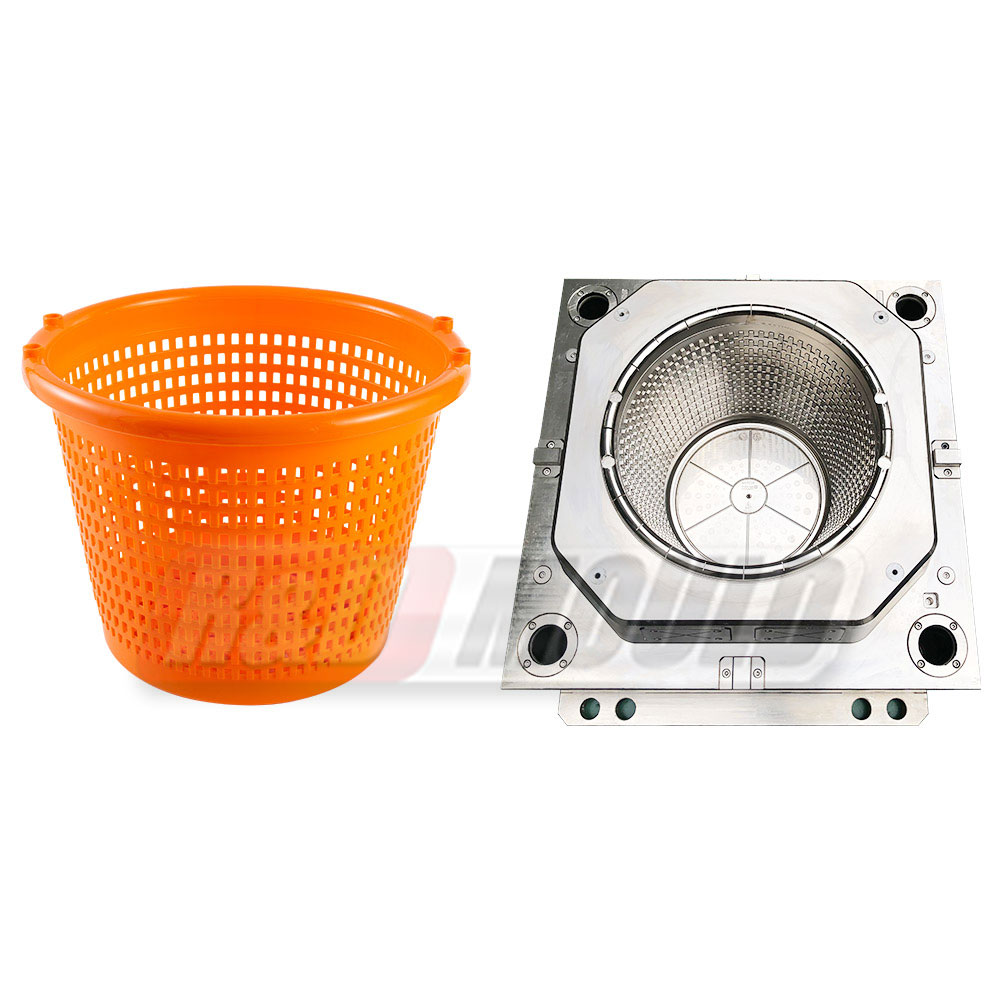
Paint pails and plastic buckets are used across packaging, coatings, chemicals, household storage, and industrial filling lines. Although the product shape looks simple, the mould behind it requires careful structural planning. Wall thickness, cooling layout, mold centering, steel choice, and cycle rhythm all affect how the bucket performs during production.
Why Bucket Mold Design Is So Important
A plastic bucket is not just a round container. In production, it must meet several practical demands at the same time:
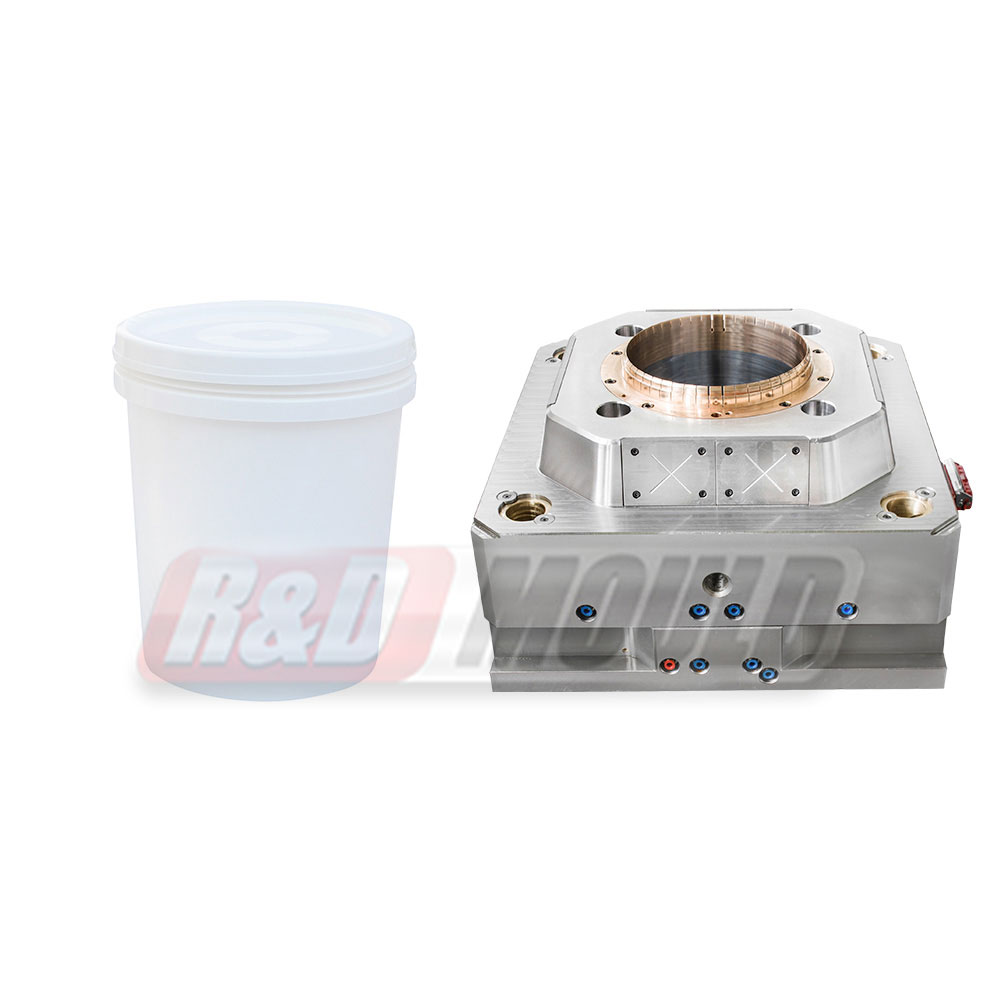
- smooth filling during injection
- stable wall thickness
- clean appearance
- consistent shape after cooling
- workable cycle rhythm
- repeat use over long production runs
This is why design is not only about product dimensions. A proper Bucket mold Manufacturer must consider how the mould behaves shot after shot, especially when production speed and appearance requirements are both important.
For paint pail moulds, a weak tooling structure may create issues such as uneven walls, cycle delay, poor cooling balance, or visible appearance defects. These are not rare problems in bucket production, which is why mould planning matters early.
Common Bucket Mold Applications in Packaging Projects
Bucket moulds are widely used for packaging and container products across different industries. Depending on the project, tooling may be developed for:
- paint pails
- packaging containers
- thin-wall containers
- labeled packaging formats
- cap and closure parts
- related injection packaging items
Among these, paint bucket moulds often require more attention to cooling and concentricity because of their wall structure and size range.
A practical Bucket mold should be developed according to the product's capacity, shape, material flow behavior, and expected production pace.
Bucket Mold Size Range Matters in Design Planning
Bucket mould design changes significantly depending on product capacity. A 0.5L pail and a 22L pail do not behave the same way in tooling or molding.
Smaller Capacity Buckets
Smaller buckets may focus more on faster cycle rhythm and stable repeat molding.
Medium and Large Capacity Buckets
Larger paint pails often place more pressure on:
- cooling balance
- wall consistency
- mold rigidity
- part centering
- heat removal efficiency
As the bucket size increases, even a small design weakness can become much more visible in production. That is why a Bucket mold Manufacturer should not treat all bucket sizes as a simple scale-up of one standard structure.
Steel Selection Affects Mould Life and Production Rhythm
Steel choice is another major point in bucket mould manufacturing. Different production targets may require different mould steel solutions.
For Around 1 Million Cycle Use
For paint bucket mould projects with a production target of around 1 million cycles, a common recommendation is:
- 2738 steel for cavity and core
- hardness around HRC35–38
This setup is often suitable for many standard production needs.
For Higher Mould Life Targets
For projects that require a longer production run, such as over 3 million cycles, a different steel level is often more appropriate:
- 2344 steel for cavity and core
- hardness around HRC45–48
This supports a more demanding production plan over time.
A capable Bucket mold Manufacturer should choose steel based on production goals rather than using the same material setup for every project.
Why Precision Tooling Matters for Bucket Shape Consistency
One common issue in paint pail production is core eccentricity. This happens when the mould core is not positioned or machined with sufficient precision, which can cause:
- uneven bucket wall thickness
- off-center pail shape
- unstable dimensional appearance
- additional pressure on mould use over time
This is not a small issue. In bucket production, wall thickness balance affects both product quality and mould stability.
This is why machining quality is not just a workshop topic. It directly affects how the bucket performs in the molding machine.
A reliable Bucket mold Manufacturer should understand that precision is not optional in pail mould production.