

 English
 عربى
عربى Español
 Français
Plastic crates are widely used in logistics, food handling, storage, transport, and industrial organization. They are expected to carry weight, stack well, move easily, and stay usable through repeated handling. Behind that daily function is the mould that shapes the product.
A reliable Crate Mold is not only about forming a plastic box with openings. It affects surface quality, loading performance, structural balance, and long-term production stability. For crate products that need to operate in real transport and storage environments, mould design matters from the outset.
Why Crate Mold Design Matters in Real Production
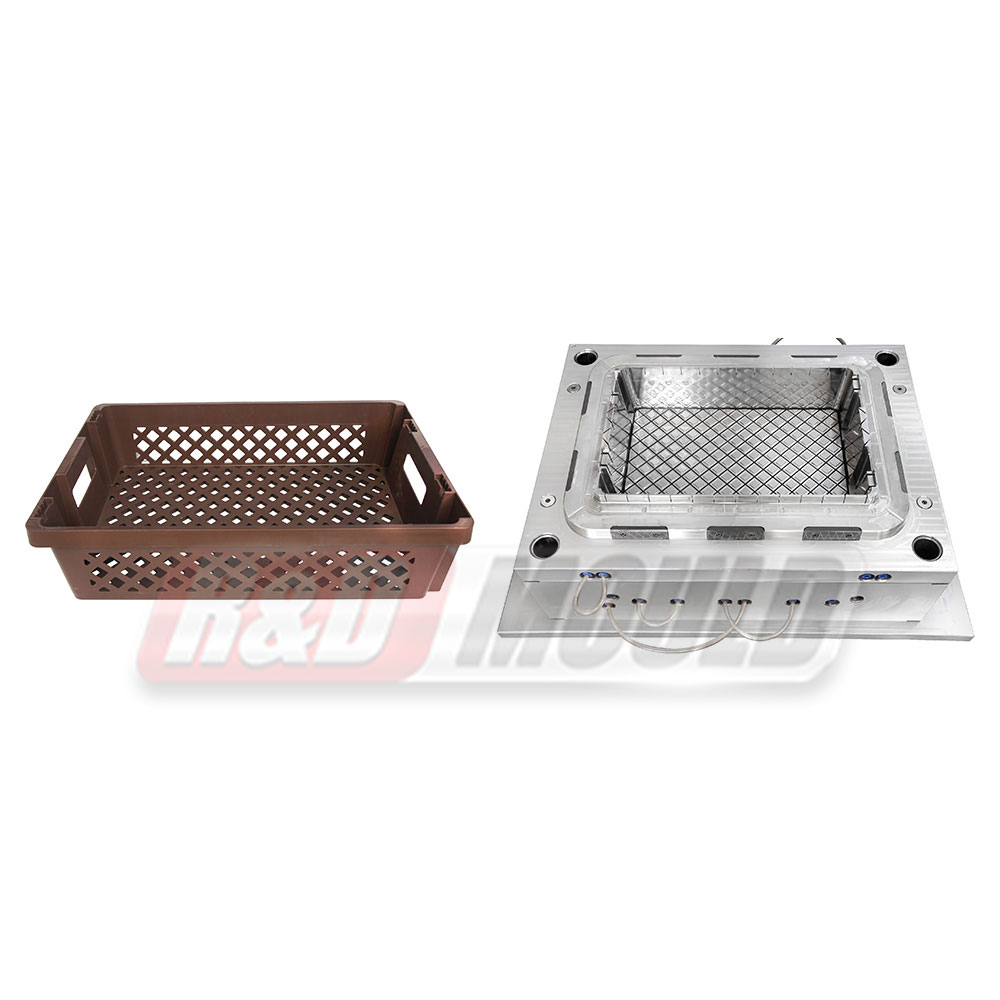
Crates are often used under repeated loading and movement. They may be stacked in warehouses, lifted by hand, transported on vehicles, or used in wet and high-frequency environments. Because of this, crate products need more than an acceptable appearance. They need structural consistency.
A practical Crate Mould Manufacturer understands that the mould must support:
- stable wall structure
- strong handle areas
- smooth product release
- repeatable molding
- clean surface finish
- practical service life
In crate production, a design weakness may not always show up in the first molded parts. It often appears later when the product is used under load or stacked repeatedly. That is why mould planning should focus on both production and real application.
Common Types of Crate Mold Used in Different Industries
Crate moulds are not one-size-fits-all. Different industries use different crate structures depending on product handling, storage conditions, and transport needs.
Common Crate Mold Categories Include:
- Collapsible crate mould
- Bottle crate mould
- Bread crate mould
- Vegetable crate mould
- Fish crate mould
- Milk crate mould
- Industrial crate mould
Each crate type has its own structural priorities.
For Example:
- Bottle crates may need stronger compartment support and base stability.
- Bread crates often focus on shape consistency and repeated handling.
- Fish and vegetable crates may require easier cleaning and durable open structures.
- Industrial crates may need higher loading capacity and reinforced frame areas.
A suitable Crate Mold should be developed according to the actual product category instead of copying a generic structure.
Precision Machining Is Critical in a Crate Mold
Plastic crate moulds often contain many structural details, especially in open-side and rib-based designs. That means machining accuracy directly affects mould behavior and product consistency.
Moving Areas and Guiding Systems Need Precision
For crate moulds, the moving area and guiding system should be processed with high-precision equipment. These are not areas where rough manual correction should replace accurate machining.
Why does this matter?
Because these mould areas affect:
- opening and closing alignment
- side structure consistency
- repeat positioning
- wear rhythm during long production runs
When these details are not controlled well, the mould may gradually lose structural stability in production. That can influence crate shape, edge alignment, and overall product performance.
A well-made Crate Mold depends heavily on machining discipline, especially in complex movement-related zones.
Why the Handle Area Needs Special Attention
One of the key technical points in crate mould design is the handle area.
This is not just a small design feature. In actual use, the handle often becomes the area where force is concentrated when the crate is lifted, moved, or carried with weight inside.
Poor Venting Can Create a Weak Point
The mould exhaust system at the handle area is especially important. If venting in this area is not designed properly, it may create a visible weld line during molding.
That weld line is not only a visual issue. It can also become a structural weak point.
Why This Matters in Real Use
When a loaded crate is carried, the handle area receives direct stress. If a weld line forms in the wrong place or material flow is not managed properly, the product becomes easier to damage from that point during repeated use.
For projects that need a dependable Crate Mold for storage, transport, assembly, or repeated handling, good tooling starts with the details that support real product use.